
Impact/Failure 2022
Beyond the Binary
Successes in Failures and Failures in Successes
SELCO Foundation along with our partner organisations is hosting the second edition of the Impact/Failure Conclave
– a platform to encourage deep, open discussions that blur the boundaries between success and failure in the development sector. The mission of the conclave is to create an environment that encourages stakeholders to own their failures, learn and evolve.
WHERE
Indian Institute of Management
Bangalore
WHEN
25-26th November, 2022
I/F 2022 Agenda
Day 1
Day 2
Day 1
Day 2
Download Agenda
Successes in Failures and Failures in Successes
Interventions are built on intricate systems of people, environment, technology, and specific societal and cultural factors. And depending on how we view a project, based on the timeline of impact, benchmarks of impact, and contextual realities on the ground, the idea of success and failure changes drastically. To fully benefit from an intervention and truly engender change, organisations must adopt a systems approach to failure and learning, and create a culture that can admit and learn from what worked, what did not, and why.
Register
I/F 2022
“So after three years, I can tell you that I had failed. I’m the only woman on the board and all my fellow partners are men. As a result, in our deployment activity, only 20 per cent of our capital was allocated to women-led organisations. I think my personal failure mirrors to a certain extent a collective failure in the impact investing industry where everyone is pretending to emulate what has been done in Silicon Valley in private equity in venture capital and not really trying and making an effort to find its own narrative.”
Elena Casolari (OPES Fund) on Failures in Impact Investing

“This is a pathology where you award an incubator to an institution, typically an academic institution, and the faculty body says that incubators and entrepreneurship cannot be a legitimate part of academic activity. They pay no attention to it and as a result, it fails. They are essentially saying that in an academic institution, scholarship is the first class citizen and entrepreneurship is the second class citizen. We try to do as much due diligence as possible to get the intention of the team that’s being awarded the incubator but we are not fully successful yet.”
Chintan Vaishnav (AIM) on Failures in Incubation

“We had about 30 subcenters which were not conducting deliveries due to electricity problems, water problems, and other issues. But the team was focused on checking the immunisation target, the delivery target, and how many pregnant women have been followed up. When the problem was brought to the table, and the infrastructure issues were sorted, we were able to address the purpose. Just infrastructure is insufficient, it has to be a part of governance as well as the culture only then will it percolate, systemise and stabilise, only then will the impact be exponential and sustainable.”
Shri Ram Kumar S (IAS) from NHM on Failures in Public Healthcare Institutions
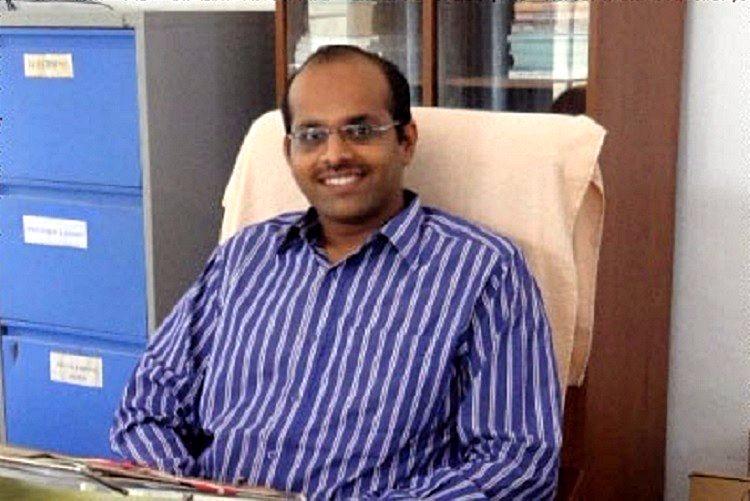
“What gives me hope are the partners we fund, and the huge progress we’re making in driving for positive developments on the climate side. But what makes me most optimistic are the interactions I have with young people and the fact that young people have different perspectives.
They are the real victims of climate change, I belong to the first generation that really felt the impact of climate change and I feel a huge sense of responsibility for it. Young people encourage me to go faster and to do better.”
Per Heggenes (IKEA Foundation) on Failures in Philanthropy

“A commitment was made to set up a loss and damage fund so that people who have the least responsibility for the impact of climate change but suffer the most, receive compensation in one way or another. Now, I realise this is just a commitment to put a fund in place and there’s nothing more to it right now. My concern is that the commitment that the rich countries made in 2009, in Copenhagen, to raise a hundred billion dollars a year to support the poorer countries in the world has never happened. And I wonder if the loss and damage fund is going to have the same trajectory, I hope not, I hope that we’ll be able to see something very different.”
Per Heggenes (IKEA Foundation) on Failures in Philanthropy
“Coronavirus was a problem and it was the travel industry that really transmitted it but neither the railways nor the airlines or commerce had any idea what to do. They do have health departments but everybody was waiting for the health ministry to say what to do. Maybe they are not well equipped to do that. So one way to deal with coordination is to explicitly recognise that coordination is going to fail upfront and then design for that so that coordination is not necessarily a problem but a design problem.
Nachiket Mor (BANYAN Academy) on Failed Collaborations in Healthcare Departments

“The failure of philanthropy everywhere is that we get attached to certain ideas and missions that are our own and don’t necessarily belong to the people in whose name we do philanthropy. It is important to take a step back and look at that with deep humility and an open mind. When one starts implementing as a social entrepreneur, we often focus on donor expectations. But in philanthropy we have to take the
onus of trust, distribute agency and not solutions. ”
Rohini Nilekani (RNP) on Failures in Philanthropy

In the world that we are seeing today with rapid changes and a lot of connections with the local and the global, it is very difficult to avoid failure. We really have an obligation to learn from these failures and question the successes. How is that journey being supported by funders? Funders are becoming results-oriented, with very little flexibility and trust in their partners.”
Carol Gribnau (DOEN Foundation) on Designing for Failures as a Funder

Climate is a hyper-complex problem and it’s a cross-cutting problem that affects health, it affects education, livelihoods, it’s in our supply chains and businesses and stock exchanges. There is an ongoing joke where we say that if this doesn’t work the stock exchange is dead, and if it works the stock exchange is dead anyway. It’s a problem the size of the planet literally and in 2022 we have realised that we are likely not staying below two degrees. So, it’s got failure writ all over but we wanted to pick up something as audacious as climate. We want to become the biggest player in this while being right by the customer.
Sameer Shisodia (Rainmatter Foundation) on Working on The Biggest Failure – Climate

“Today you can spend on energy and worsen water, you can spend on income and actually worsen livelihoods, or health. Somebody asked us what happens to the place when you fix one variable and destroy three others. So we have to take a more holistic approach to problem-solving. I think we are also starting to see some collaboration in the Indian philanthropy and CSR space. So, as this starts to happen more, the quality of problem-solving will also improve dramatically. Unfortunately, the climate crisis is a great way to bring this together because it cuts across almost every other sector.”
Sameer Shisodia (Rainmatter Foundation) on Failures in Designing
“There was a solar energy project for primary health centres and district hospitals in Madhya Pradesh. The experts did not take the stakeholders’ needs into consideration and fixed solar panels by drilling holes on the roofs. They also used consultation rooms to store batteries. During later field visits, I realised that the roofs had started leaking and the batteries had taken up much-needed space. Moreover, the panels were not being used due to technical faults that required experts to come in from far-off places. It probably goes down to who procures the system and for what end. If it is a government entity that is doing large procurements and trying to run a supply-driven programme, you are bound to fail.”
Gauri Singh (IRENA) on Failures in Energy Designs for Communities

“Every entrepreneur is incredibly optimistic about how much they can achieve and how quickly they can achieve it. It is not my job to kill that optimism. But it is my responsibility within my programme planning to recognise that this is going to take longer and build for that. Failures and negative results in interventions need to be recorded as case studies so that organisations do not keep repeating each other’s mistakes. This will help shift the success metric from getting successful research done to effecting adoption and scale from a research perspective.”
Stephanie Jones (Good Energies Foundation) on Accounting for Failures in Investment Funds

Previous
Next
Summary Report
Speakers
Neeraj Jain
Country Director – PATH India & Director – PATH South Asia
Elena Casolari
Co-founder and Partner, OPES Italia Sicaf EuVECA, and Co-founder and Chairperson, Fondazione OPES-LCEF
Gerry Higgins
Founder and Managing Director of Social Enterprise World Forum
Nithin Kamath
Founder and CE0, Zerodha/Rainmatter
Dr. Anjal Prakash
Research Director and Professor, ISB
Sourav Mukherji
Professor, IIMB
Jaideep Varma
Writer and Director
Victoria Sabula
CEO at AECF
Sameer Shisodia
Sameer Shisodia
CEO, Rainmatter Foundation
Manoj Kumar
Founder, Social Alpha
Usha Thorat
Former Deputy Governor, Reserve Bank of India
Carol Gribnau
Executive Director, DOEN Foundation
Gauri Singh
, Deputy Director-General, International Renewable Energy Agency
Per Heggenes
Chief Executive Officer, IKEA Foundation
Mallika Srivastava
Executive Director, CmF
S M Vijayanand
President, CRISP
Bijalben
Director, MHT
Harish Hande
Founder & Chief Executive, SELCO Foundation
Arvind Lodaya
Professor of Design, Vidyashilp University
Jai Asundi
Executive Director, CSTEP
Deepak Visvanathan
Consultant, Habitat for Humanity India Trust
Solomon Asfaw
Monitoring, Evaluation, and Learning, Sustainable Energy for ALL
Dr. Chintan Vaishnav
Mission Director, Atal Innovation Mission
Stephanie Jones
Global Programme Manager, Clean Energy, Good Energies Foundation
Dr. Rachna Jain
Co-founder, Jan Swasthya Sahyog
Mala Subramaniam
CEO, Arghyam
Viraj Tyagi
CEO, eGov Foundation
Siddharth Gahoi
Sustain Plus
Anand Ganesh
COO , NSRCEL , IIM Bangalore
Dr. Angela Chaudhuri
Health Practice Lead, Catalyst Group
Dr Rajani Ved
Director Health, Bill & Melinda Gates Foundation
Nachiket Mor
Public Health Professional
Siraz Hirani
Grassroot Champion
Rohini Nilekani, activist
Philanthropist
MS Sriram
Faculty, Indian Institute of Management Bangalore
PVS Suryakumar
NABARD
Gautam Khot
CTO-in-Residence, Brigade Reap
Anjali Mohan
Partner, Integrated Design
Sundeep Rao
Stand-up Comedian
Rachita Vora
Co-Founder and Director, IDR
Sneha Philip
Director, IDR
Hudah Jaffer
Director, SELCO Foundation
Shama Karkal
CEO, Swasti
Dr. Anand Sivaraman
Co-founder Remidio Innovative Solutions
Piya Bahadur
Founder and CEO, MeraBills
Wilma Rodrigues
Founder and CEO, Saahas Zero Waste
Vyjayanthi Mala
Chief Orchestrator, Societal Platform
Swarathma
Previous
Next

Submit Your Failure Story
Share your failure story with us and contribute to a culture that can admit and learn from what did not work, one where failing and learning are shared and celebrated.
Submit Your Failure Story